


Iwi want early say in South Taranaki council decisions

South Taranaki iwi want their partnership with the local council to get more specific and practical, with mana whenua involved earlier in making decisions.
South Taranaki District Council signed He Pou Tikanga two years ago, agreeing to boost collaboration with the four iwi agencies Te Kaahui o Rauru, Te Rūnanga o Ngāti Ruanui, Te Korowai o Ngāruahine and Te Kāhui o Taranaki.
The agreement is being reviewed before the council’s long term plan gets updated next year.
He Pou Tikanga helps the council meet Local Government Act requirements to provide ways for Māori to contribute to decision-making.

At a council workshop on Wednesday, Te Rūnanga o Ngāti Ruanui policy manager Graham Young said the four iwi agencies saw the existing agreement as a starting point.
“He Pou Tikanga must move beyond just the broad words and partnership phrasing and … become a more practical framework, where there's perhaps more early involvement, shared decision-making, and clear accountability.”
“Ngā iwi thought [it much better] to be at the front end before council positions, policy and plans or project decisions have been formed.”

Young said mana whenua were not merely stakeholders.
“Ngā iwi must be clearly recognized as mana whenua, iwi authorities, Treaty partners, and kaitiaki (stewards) within our respective takiwā (territories).”
Although the Government was pushing local bodies in the opposite direction, Young said iwi and council should still develop joint decision-making “while recognising current legislative constraints.”
Taranaki iwi representative Peter Moeahu said council needed stronger links with hapū.
“I'm not quite sure if council understand about the role hapū play,” Moeahu said.
“Hapū have been around for forever: Our post-settlement governance entities [PSGEs] are more of a modern establishment, to assist us in our development.”

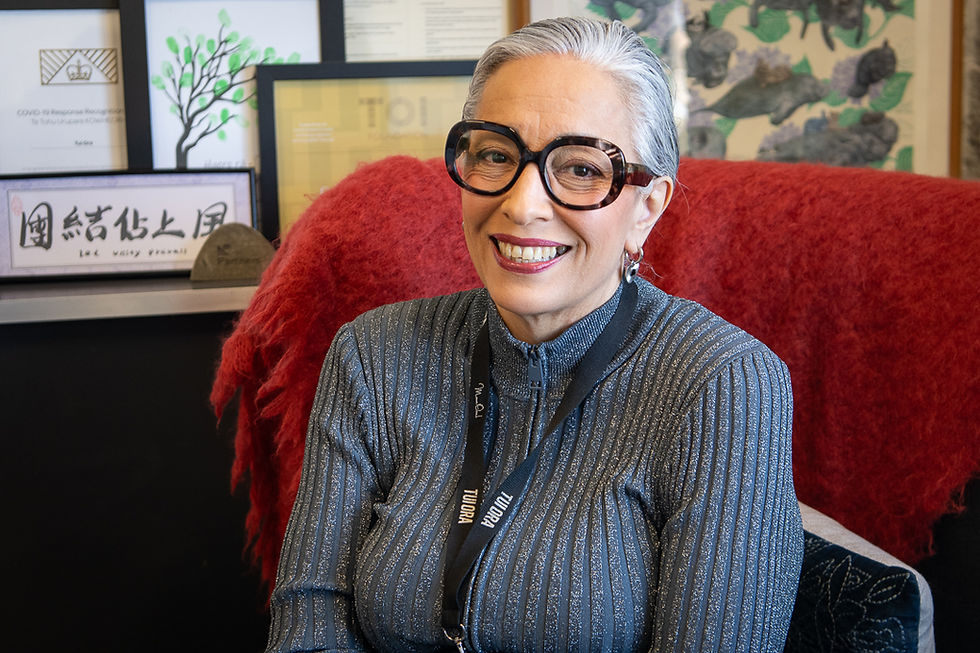
Te Korowai o Ngāruahine tumu whakarae Te Aorangi Dillon agreed her organisation – a PGSE – was not mana whenua.
“Te Korowai o Ngāruahine is guided by our hapū and would expect that the council continues to forge and strengthen strong relationships with hapū and marae.”
“It encourages us to not take that one-stop-shop approach.”
The agreement commits not just leaders but staff from both sides to work together.
Dillon said council officers already get in touch, but they should raise issues earlier.
“Often we're working in a reactive capacity to ... some of the kaupapa that land on our table, which makes it a bit harder for us.”
The Government’s local body reforms are in disarray after ministers pulled a pre-election handbrake.

Mayor Phil Nixon said he hoped any replacement council would recognise the progress made between iwi and South Taranaki District Council.
“We could lose a lot of ground.
“It is important that we have it fairly well explained, [including] whatever changes we make to this document now.”
Moeahu too praised the progress.
“I'm very proud of South Taranaki District Council,” he said.
“The relationship … is very, very strong, and it's just a matter of continuing to grow that relationship.”
nā Craig Ashworth
LDR is local body journalism hosted by Te Korimako o Taranaki and funded by Te Reo Irirangi o Aotearoa and Irirangi te Motu



Comments